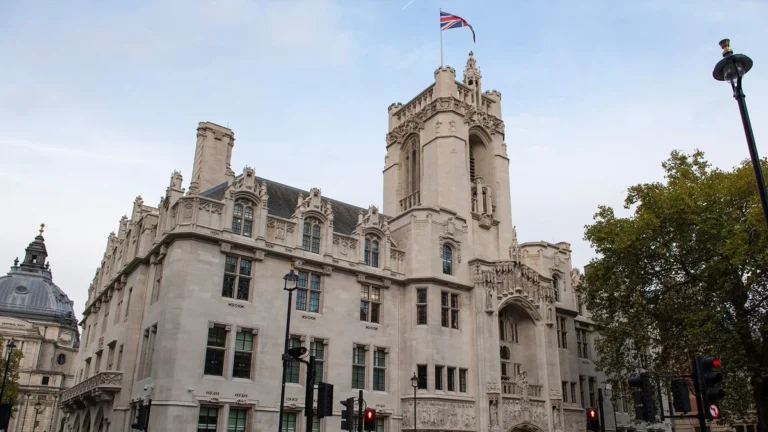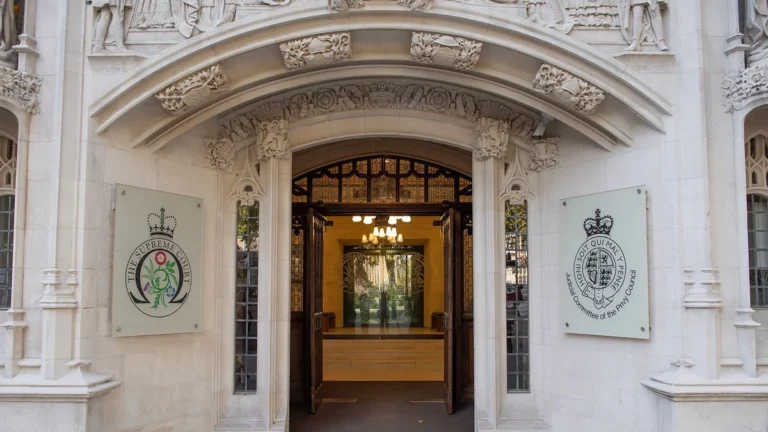
The Judicial Committee of the Privy Council—sitting in London as the highest appellate court for Trinidad and Tobago—has ruled that Sections 13 and 16 of the Sexual Offences Act 1986 violate constitutional rights by criminalising private, consensual sexual relations between adults of the same sex. Allowing an appeal brought by gay rights activist Jason Jones on November 10, 2026, the Board overturned a March 2025 Court of Appeal decision and invited further written submissions before issuing its final remedial order.
The constitutional challenge targeted Sections 13 and 16 of the Sexual Offences Act 1986, which establish the criminal offences of “buggery” and “serious indecency”. In 2018, the High Court of Trinidad and Tobago ruled in Jones’s favour, holding that criminalising private consensual intimacy between adults infringed fundamental constitutional protections. In March 2025, however, the Court of Appeal reversed that judgment, concluding that the Constitution’s savings clause preserved pre-independence colonial criminal offences and required older statutory provisions to apply where the 1986 Act restricted constitutional rights.
Reversing the Court of Appeal, the Privy Council held that the constitutional savings clause did not shield the 1986 provisions. Examining the legislative history, the Board found that Sections 13 and 16 of the Sexual Offences Act 1986 went substantially beyond merely re-enacting pre-existing colonial offences. Specifically, the 1986 enactment imposed generally harsher criminal penalties and expanded the scope of the serious indecency offence—which had previously applied only to males—so that it also applied to females.
Having determined that the savings clause was inapplicable, the Privy Council next examined whether Section 13 of the Constitution of Trinidad and Tobago nevertheless validated the restrictions. Section 13 permits Parliament to enact legislation that expressly overrides specified constitutional rights provided the statute secures the support of at least a three-fifths majority of all members in each House of Parliament and the restrictions are shown to be reasonably justifiable in a society with proper respect for individual rights and freedoms.
Although the Board accepted that Parliament had satisfied the formal three-fifths procedural requirement when passing the 1986 Act, it concluded that criminalising private, consensual same-sex conduct between adults was not reasonably justifiable. Emphasising the core values of constitutional privacy and human dignity, the Privy Council stated that the freedom to form an intimate personal relationship lies at the heart of the constitutional right to respect for private and family life.
On the question of judicial remedy, the Privy Council indicated that it favoured upholding the High Court’s 2018 modification approach, which read down Sections 13 and 16 so that they no longer apply to private, consensual conduct between adults. Jones, however, urged the Board to strike down both statutory provisions in their entirety rather than modifying them, arguing that partial modification left residual ambiguity on the statute book. Inviting further written submissions from the parties on the precise form of relief, the Privy Council deferred its final remedial order.
Human Rights Watch welcomed the decision as a major constitutional milestone for equality and privacy rights in the Caribbean, noting that it aligns Trinidad and Tobago’s constitutional jurisprudence with recent decriminalisation rulings across Saint Lucia, Dominica, and Barbados. Once the Board issues its final remedial order after considering written submissions on modification versus full invalidation, the judgment will bind all courts in Trinidad and Tobago and stand as persuasive authority across Commonwealth jurisdictions with comparable constitutional savings clauses, statutory criminal provisions, and fundamental privacy guarantees. The ruling also reinforces judicial willingness across the Caribbean to scrutinise post-independence amendments strictly when legislatures expand or modify colonial-era criminal statutes affecting private adult conduct, intimate autonomy, and consensual relationships in modern constitutional democracies.
Official Sources
Official Primary Document: Jason Jones v. Attorney General of Trinidad and Tobago (Privy Council Appeal (Judgment of November 10, 2026)), issued by Judicial Committee of the Privy Council on November 10, 2026. Direct link: https://www.jurist.org/news/2026/11/trinidad-and-tobago-top-appeals-court-rules-against-criminalizing-consensual-same-sex-conduct/
THE LAW SCHOOL HUB — LEARN LAW. UNDERSTAND JUSTICE. Read more verified national and international legal news reports at https://thelawschoolhub.com.