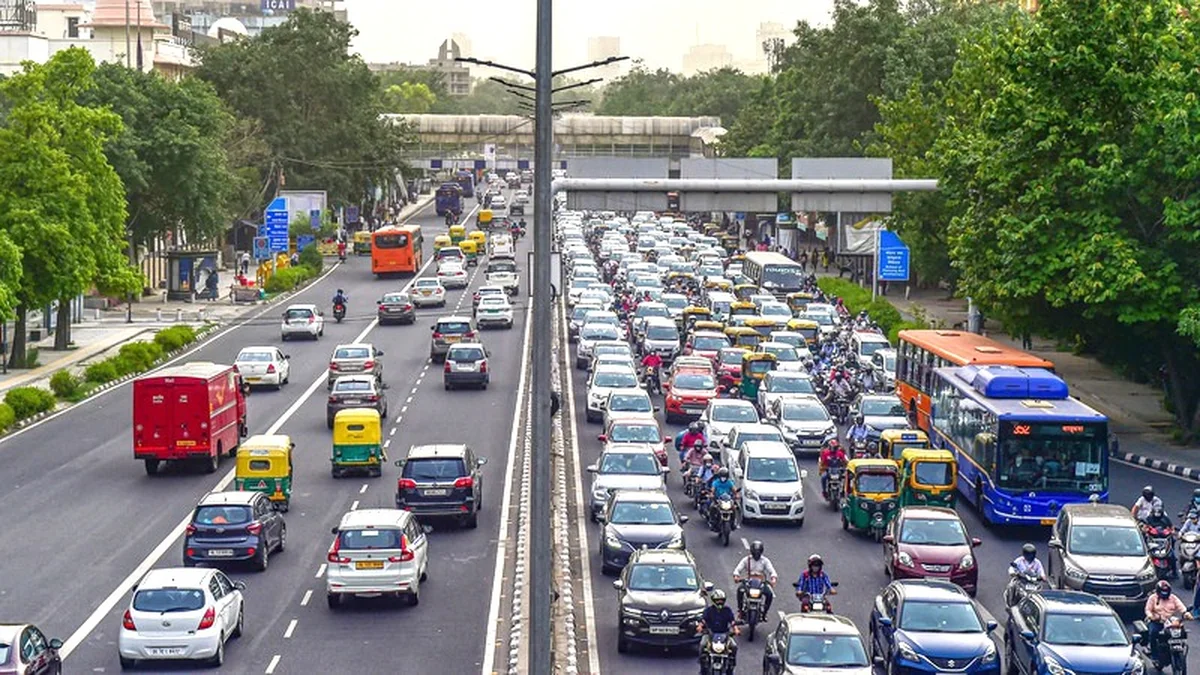
The Delhi High Court has directed the Government of NCT of Delhi to furnish comprehensive data on the number of motor vehicles currently plying on public roads in the national capital without valid third-party insurance. Highlighting the severe human and financial toll of lax enforcement, Justice Anish Dayal observed that the widespread absence of mandatory insurance frequently leaves road accident victims and bereaved families without any practical remedy to recover court-awarded compensation.
The High Court underscored that third-party insurance mandated under the Motor Vehicles Act, 1988, is not an optional paperwork formality but a binding statutory obligation designed to protect innocent road users from financial ruin following crashes caused by negligent driving.
Key Legal Findings & Proceedings
Justice Anish Dayal made these observations while hearing an appeal filed by a motorcyclist, Mukul Verma, challenging an award passed by a Motor Accident Claims Tribunal (MACT). The Tribunal had directed payment of approximately ₹26.32 lakh, along with 7% interest, to the claimants in connection with a fatal road accident that occurred on September 23, 2018.
According to the claimants’ case before the Tribunal, the deceased was riding as a second pillion rider on a motorcycle allegedly driven by Verma during a Ganesh Visarjan procession. They alleged that rash and negligent driving caused the deceased to fall from the motorcycle and sustain fatal injuries. Representing Verma through the Delhi High Court Legal Services Committee, his counsel contested this narrative, submitting that the deceased had actually been travelling on a different motorcycle that attempted to overtake Verma’s vehicle at high speed and lost balance. Counsel further submitted that Verma and another individual, Aakash, had rushed the injured man to BSA Hospital and alerted both the police and the victim’s relatives.
Looking beyond the contested factual merits of the individual appeal, the Court drew attention to a recurring structural crisis in motor accident litigation: uninsured vehicles. Justice Dayal noted that in numerous cases before tribunals, the owners or drivers of offending vehicles lack the financial means to satisfy substantial compensation awards running into lakhs of rupees. When an offending vehicle carries no valid third-party cover, victims suffering permanent disability, medical trauma, or loss of livelihood—as well as dependants of deceased breadwinners—are left holding paper decrees that cannot be executed.
Observing that such outcomes defeat the core social-welfare objective of the Motor Vehicles Act, the High Court sought official figures from the Delhi Government on uninsured vehicles operating on capital roads so that enforcement gaps can be squarely addressed.
Institutional & Legal Significance
India records one of the highest rates of road accident fatalities worldwide, yet a substantial share of two-wheelers and older private vehicles operate on public highways with lapsed insurance policies. Even when Motor Accident Claims Tribunals adjudicate claims sympathetically, the absence of an insurer turns compensation recovery into a protracted and often futile execution battle against asset-poor vehicle owners.
By calling for hard enforcement data from the Delhi Government, the Delhi High Court has nudged transport and traffic authorities toward systemic compliance measures—such as linking automated challan cameras, VAHAN database audits, and vehicle registration renewals to active third-party insurance verification. The intervention aligns closely with judicial efforts across India to ensure that statutory motor insurance protections translate into real financial relief for road accident victims.