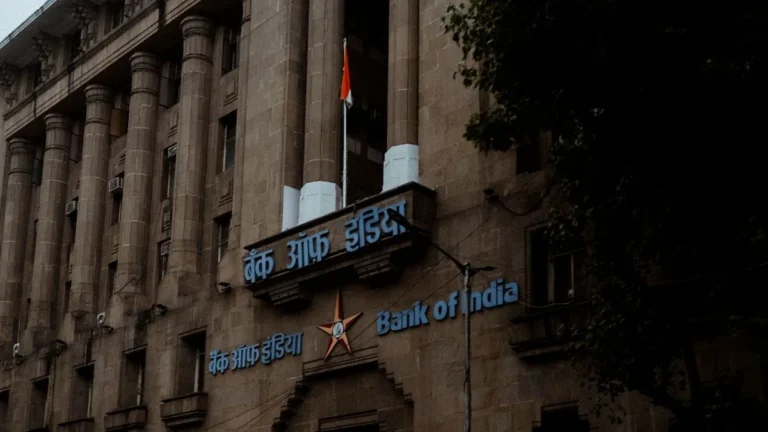
On November 28, 2026, the Supreme Court of India addressed key legal and regulatory developments in Do Secured Creditors Under SARFAESI Have Priority Over MPID Depositors? Supreme Court Refers Issue To Three-Judge Bench. The Supreme Court has referred to a three-Judge Bench the questions of whether deposits recoverable under the Maharashtra Protection of Interest of Depositors (in Financial Establishments) Act, 1999, fall within “all other debts” under Section 26E of the SARFAESI Act; whether SARFAESI recoveries should receive priority; and whether Parliament is the dominant legislative power over the recovery of dues as an essential part of banking. The Court was hearing State Bank of India's appeal against a Bombay High Court judgment affirming the MPID Designated Court's refusal to permit the bank to appropriate ₹3.5 crore from the proceeds of mortgaged properties sold under the SARFAESI Act. The development, reported from verified legal sources (Verdictum), carries direct relevance for statutory compliance, procedural fairness, and institutional oversight.
The proceedings or institutional action in Do Secured Creditors Under SARFAESI Have Priority Over MPID Depositors? Supreme Court Refers Issue To Three-Judge Bench were examined by the Supreme Court of India in the exercise of its mandate under Articles 14, 21, and 226/136 of the Constitution of India alongside applicable central statutes and regulatory norms. The amount, retained in a fixed deposit, had grown to approximately ₹5.51 crore. Pardiwala and Justice Ujjal Bhuyan observed: “In view of what has been pointed out hereinabove, we are of the opinion that, for a comprehensive consideration and an authoritative pronouncement after taking into account all aspects, including those dealt with hereinabove, the matter needs to be placed before Hon’ble the Chief Justice of India to constitute an appropriate three-Judge Bench.” The Bench further observed: “The three-Judge Bench constituted may address itself to the following questions: (i) Whether the “deposits” sought to be recovered under the MPID Act would fall within the ambit of the expression “all other debts” appearing in Section 26E of the SARFAESI Act? The record establishes the documentary basis and institutional steps governing the controversy.
(ii) Whether the harmonious construction of the statutory schemes of the SARFAESI Act and the MPID Act indicates that the “recovery of dues” under the former should be given priority over the latter? (iii) Whether it is the Parliament which is the dominant power insofar as the aspect of “recovery of dues” is concerned because the same is essential to the activity of banking which falls within the legislative field of the Union under Entry 45 of List I to the Schedule VII? These verified circumstances formed the core evidentiary foundation evaluated prior to the publication dated November 28, 2026.
The legal framework governing this development centres on Articles 14, 21, and 226/136 of the Constitution of India alongside applicable central statutes and regulatory norms. By anchoring its analysis in these governing instruments and established precedent, the Supreme Court of India defined both the scope of its authority and the legal boundaries within which concerned authorities, institutions, and affected parties must operate.
In reaching its conclusions in Do Secured Creditors Under SARFAESI Have Priority Over MPID Depositors? Supreme Court Refers Issue To Three-Judge Bench, the Supreme Court of India linked each determination directly to the requirements of the governing legal text and the verified record. Consistent with settled principles of judicial review, procedural fairness, and institutional accountability, exercises of public or adjudicatory authority must rest on objective standards, reasoned findings, and strict adherence to applicable mandates.
Pursuant to its findings, the Supreme Court of India articulated the operative legal position, policy directions, or procedural steps taking effect in the matter. Where statutory thresholds, treaty obligations, or compliance timelines are engaged, concerned authorities and stakeholders must give effect to the determination within the parameters confirmed on the record.
As to its present legal effect, the determination clarifies the governing compliance and procedural standards applicable to similarly situated proceedings within India. At the same time, the official record defines the scope of the ruling strictly in terms of the provisions, factual matrix, and procedural posture addressed in Do Secured Creditors Under SARFAESI Have Priority Over MPID Depositors? Supreme Court Refers Issue To Three-Judge Bench, ensuring that its application remains faithful to the text and record.
Entities, public authorities, and parties falling within the scope of Articles 14, 21, and 226/136 of the Constitution of India alongside applicable central statutes and regulatory norms are guided by the principles reaffirmed in Do Secured Creditors Under SARFAESI Have Priority Over MPID Depositors? Supreme Court Refers Issue To Three-Judge Bench. Within India, the record dated November 28, 2026 serves as an authoritative reference for the specific obligations, procedural safeguards, and institutional boundaries confirmed by the Supreme Court of India.
Official Sources
Primary / Verified Source: Do Secured Creditors Under SARFAESI Have Priority Over MPID Depositors? Supreme Court Refers Issue To Three-Judge Bench (Verdictum), dated November 28, 2026. Direct link: https://www.verdictum.in/supreme-court/state-bank-of-india-v-state-of-maharashtra-and-others-2026-insc-1279-1626600
THE LAW SCHOOL HUB — LEARN LAW. UNDERSTAND JUSTICE. Read more verified national and international legal news reports at https://thelawschoolhub.com.