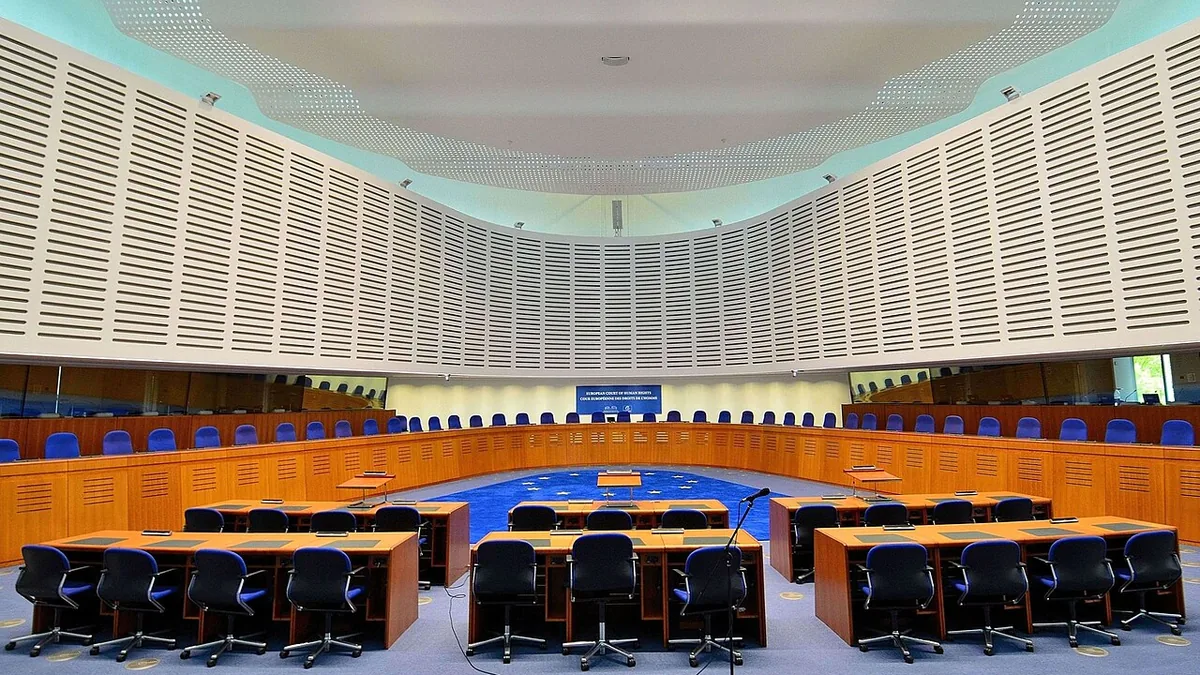
On November 24, 2026, the Grand Chamber of the European Court of Human Rights (ECtHR) handed down three long-awaited judgments—A.R. and Others v. Poland (no. 42120/21), H.M.M. and Others v. Latvia (no. 42165/21), and C.O.C.G. and Others v. Lithuania (no. 17764/22)—addressing summary returns of migrants at the European Union’s eastern border with Belarus during 2021 and 2022.
The cases concerned nationals of Afghanistan, Iraq, and Cuba who attempted to cross unlawfully from Belarus into Poland, Latvia, and Lithuania amid what the Grand Chamber explicitly characterised as “instrumentalisation of migration.” The Court accepted that Belarusian authorities had actively encouraged, facilitated, or forced migrant movements across the border with the aim of destabilising neighbouring Council of Europe Member States and exerting geopolitical pressure on the European Union.
Poland, Latvia, Lithuania, and intervening European governments argued that traditional border-asylum jurisprudence had to adapt to hybrid state-sponsored migration pressure. The Grand Chamber acknowledged that States possess the sovereign right to control their external borders and may refuse irregular entry or close crossing points to counter hostile instrumentalisation—provided they respect the absolute, non-derogable prohibition of torture and inhuman or degrading treatment under Article 3 of the European Convention on Human Rights.
Applying a fact-sensitive framework, the Grand Chamber drew a sharp distinction based on vulnerability and individualised risk assessment. In H.M.M. and Others v. Latvia, the Court held unanimously that Latvia violated Article 3 with respect to applicant children and their accompanying family members who were repeatedly removed to Belarus without an adequate assessment of the ill-treatment risks awaiting them there. However, regarding adult applicants in the same case who did not fall within vulnerable categories, the Court unanimously found no violation of Article 3.
Similarly, in C.O.C.G. and Others v. Lithuania, a majority of eleven votes to six held that Lithuania had not violated Article 3 when returning four Cuban nationals who did not belong to a vulnerable group and had not substantiated an individualised risk of prohibited ill-treatment in Belarus. The Court observed that where irregular entrants are not exposed to real, personal danger upon return to a neighbouring country, border authorities enjoy wider operational latitude.
The Grand Chamber also examined complaints under Article 4 of Protocol No. 4 (prohibition of collective expulsion of aliens), reiterating that States cannot be faulted for failing to conduct individualised interviews where migrants bypass official border crossing points in large, coordinated groups orchestrated by a foreign State, provided genuine and effective access to legal entry and asylum procedures remains available at designated checkpoints.
In assessing the broader European legal landscape, the Grand Chamber noted that Council of Europe Member States are entitled to treat state-sponsored border destabilisation as an exceptional security challenge requiring coordinated operational responses. Nevertheless, the Court stressed that national emergency legislation cannot extinguish core procedural duties toward minors, pregnant women, or seriously ill individuals encountered in border zones.
The trio of Grand Chamber rulings marks a watershed moment in Strasbourg human rights jurisprudence. By recognising that summary removal to an instrumentalising third State does not automatically breach Article 3 for non-vulnerable adults—while strictly insisting on protective screening for children, families, and persons facing concrete harm—the Court forged a calibrated middle path between sovereign border defence and core Convention safeguards across Europe.
European interior ministries and human rights monitors alike will study the Grand Chamber’s vulnerability-focused framework closely as EU Member States implement the Pact on Migration and Asylum along external frontiers exposed to hybrid border pressures.
The Grand Chamber judgments take immediate legal effect and are final across all 46 Council of Europe Member States.
Official Sources
Official Primary Document: A.R. and Others v. Poland, H.M.M. and Others v. Latvia, C.O.C.G. and Others v. Lithuania (Official Record), issued by European Court of Human Rights (Grand Chamber) on Verified Date. Direct link:
THE LAW SCHOOL HUB — LEARN LAW. UNDERSTAND JUSTICE. Read more verified national and international legal news reports at https://thelawschoolhub.com.