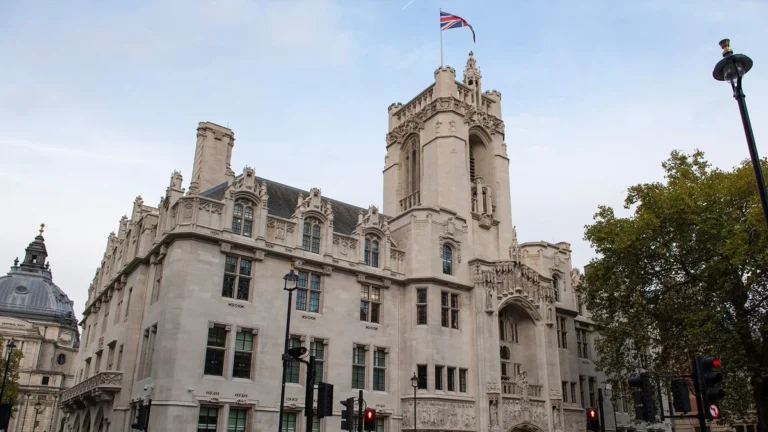
On November 19, 2026, Advocate General Laila Medina delivered her Opinion before the Court of Justice of the European Union in Verbraucherzentrale Bundesverband (Case C-643/25), concluding that an online platform cannot describe a digital service as free when access is conditioned on users providing personal data for commercial exploitation. Issued in Luxembourg under Press Release No. 169/26, the Opinion addresses a preliminary reference from a German court in proceedings brought by the Federation of German Consumer Organisations against Meta Platforms concerning Facebook’s long-standing marketing claim that the platform is free.
The dispute originated in Germany after Verbraucherzentrale Bundesverband challenged Facebook’s promotional statements telling prospective users that the service is free of charge. Although users do not pay a monetary subscription fee to create a standard account, they must accept terms permitting the platform to collect, process, and commercially exploit their personal data for targeted advertising. The referring German court asked the Court of Justice of the European Union whether describing such a data-for-access arrangement as free constitutes a misleading commercial practice under European Union consumer law.
In her Opinion, Advocate General Medina examined the Unfair Commercial Practices Directive alongside modern European Union digital legislation, including the Digital Content Directive and the General Data Protection Regulation. She observed that the European legislature expressly recognises personal data as a form of counter-performance in digital markets when data is not processed solely to supply the service or to fulfil a statutory obligation. Where a platform monetises user data through behavioural profiling and advertising sales, that data carries measurable economic value and functions as payment.
Advocate General Medina drew a clear distinction between necessary technical processing and commercial exploitation. A digital service may still be described as free if the trader collects personal data strictly to operate the requested service, maintain security, or satisfy mandatory legal obligations. However, once a business requires consumers to consent to commercial data processing as a condition of access, representing the transaction as free misleads consumers about the true economic cost of the bargain.
At the same time, the Advocate General clarified that European Union consumer law does not prohibit companies from offering digital services in exchange for personal data. Businesses remain free to adopt data-driven business models, provided their terms comply with the General Data Protection Regulation and other applicable safeguards. What the Unfair Commercial Practices Directive forbids is concealing the commercial exchange behind the label of a cost-free offer when users are in substance paying with their personal data.
The Opinion notes that consumers frequently underestimate the commercial value of their personal information when presented with prominent claims that a service costs nothing. Under European consumer protection rules, a commercial practice is misleading if it deceives or is likely to deceive the average consumer regarding the price or the manner in which the price is calculated, thereby causing the consumer to take a transactional decision they would not otherwise have taken.
An Advocate General’s Opinion is not binding on the Court of Justice of the European Union, and the judges in Luxembourg will now begin deliberations before delivering their final judgment in Case C-643/25 at a later date. Nevertheless, the Opinion carries substantial persuasive weight across the European Union’s single market and signals heightened judicial scrutiny of data-monetised social media and technology platforms. If the Court follows Advocate General Medina’s analysis, online platforms operating across EU member states will need to review their registration flows, subscription tiers, and marketing copy to ensure they do not present data-conditioned access as cost-free. For comparative legal practitioners in India and globally, the reasoning illustrates how consumer protection statutes are evolving to treat personal data as economic consideration rather than a costless byproduct of online access.
Official Sources
Official Primary Document: Verbraucherzentrale Bundesverband (Case C-643/25) (Case C-643/25), issued by Court of Justice of the European Union (CJEU) on November 19, 2026. Direct link: https://curia.europa.eu/site/upload/docs/application/pdf/2026-11/cp260169en.pdf
THE LAW SCHOOL HUB — LEARN LAW. UNDERSTAND JUSTICE. Read more verified national and international legal news reports at https://thelawschoolhub.com.