

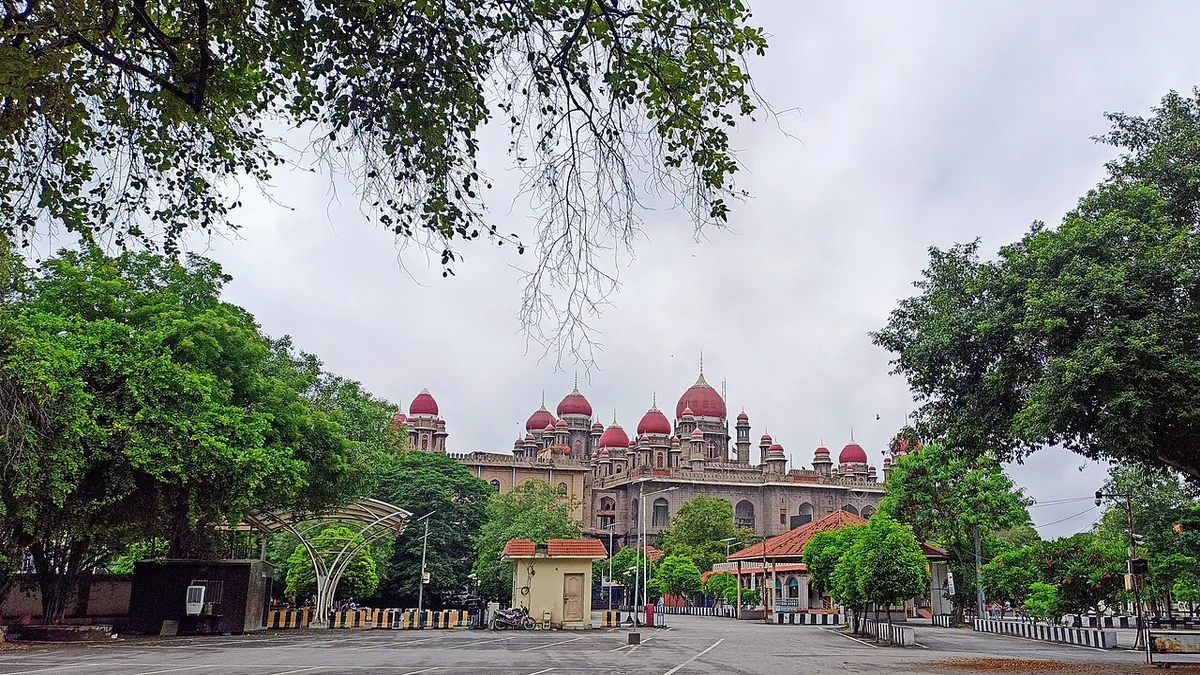
In a clear restatement of Indian matrimonial jurisdiction reported on November 21, 2026, a Division Bench of the Telangana High Court comprising Justices K. Lakshman and K. Sujana held that neither Family Courts nor High Courts can grant a decree of divorce solely on the ground of “irretrievable breakdown of marriage” under the Hindu Marriage Act, 1955. At the same time, the Bench clarified that prolonged separation and the complete absence of any prospect of reconciliation may be weighed alongside other established circumstances when deciding a matrimonial appeal.
The ruling came while allowing a husband’s appeal challenging a Family Court’s dismissal of his divorce petition. Examining the statutory architecture of Section 13 of the Hindu Marriage Act, the Division Bench emphasised that Parliament has not enacted irretrievable breakdown as a standalone ground for dissolution of marriage. Following the Supreme Court Constitution Bench’s 2023 precedent in Shilpa Sailesh v. Varun Sreenivasan, plenary authority to dissolve a dead marriage purely on irretrievable breakdown resides exclusively with the Supreme Court under Article 142 of the Constitution.
However, the Telangana High Court distinguished between treating irretrievable breakdown as an independent legal ground and evaluating long-term separation as contextual corroboration of statutory cruelty or desertion. Where parties have lived apart for years with bitter, irreconcilable litigation and zero possibility of cohabitation, insisting on an empty legal bond serves neither spouse nor child welfare when statutory fault or supporting circumstances are otherwise made out on the record.
Balancing equities in the appeal before it, the Division Bench dissolved the marriage while safeguarding the minor child’s financial future, directing the husband to pay ₹50 lakh to his son within three months as a condition of the decree.
Family law practitioners across Telangana welcomed the judgment as a practical guide for trial and appellate courts, preventing Family Courts from exceeding statutory jurisdiction while preserving holistic, child-centric relief in long-separated marriages.
Examining the boundary between statutory divorce grounds and constitutional equity, Justices K. Lakshman and K. Sujana explained that Section 13 of the Hindu Marriage Act, 1955 enumerates specific fault and mutual-consent grounds—such as cruelty, desertion, and adultery—and does not empower Family Courts or High Courts to dissolve a marriage solely because the relationship has broken down irretrievably. While the Supreme Court of India exercises extraordinary jurisdiction under Article 142 of the Constitution to grant divorce on irretrievable breakdown in appropriate cases, High Courts exercising statutory appellate jurisdiction under Section 19 of the Family Courts Act cannot bypass legislative text.
At the same time, the Division Bench adopted a pragmatic approach to evidentiary assessment. Where spouses have been locked in prolonged separation for years without any realistic possibility of reconciliation, courts may factor that deadlocked reality into the overall evaluation of mental cruelty and matrimonial viability alongside other evidence on record.
By conditioning the divorce decree on the husband’s payment of ₹50 lakh to his son within three months, the Telangana High Court ensured that dissolving an unworkable marriage did not prejudice the minor child’s long-term financial security and educational needs.
Consequently, spouses seeking dissolution of marriage before Family Courts or High Courts must continue pleading and proving recognised statutory grounds under Section 13 of the Hindu Marriage Act, 1955, while using prolonged separation as supporting context rather than a standalone legal substitute.
At the same time, the ₹50 lakh financial direction for the parties’ son demonstrates how appellate benches can pair strict statutory adherence with equitable child-welfare safeguards when dissolving long-broken marriages.
The Division Bench’s balanced judgment clarifies matrimonial appellate jurisdiction across Telangana while protecting the minor child’s financial welfare.
The appeal was accordingly allowed on these terms.
Official Sources
Official Primary Document: Matrimonial Appeal on Irretrievable Breakdown of Marriage (Official Record), issued by Telangana High Court on Verified Date. Direct link:
THE LAW SCHOOL HUB — LEARN LAW. UNDERSTAND JUSTICE. Read more verified national and international legal news reports at https://thelawschoolhub.com.





