
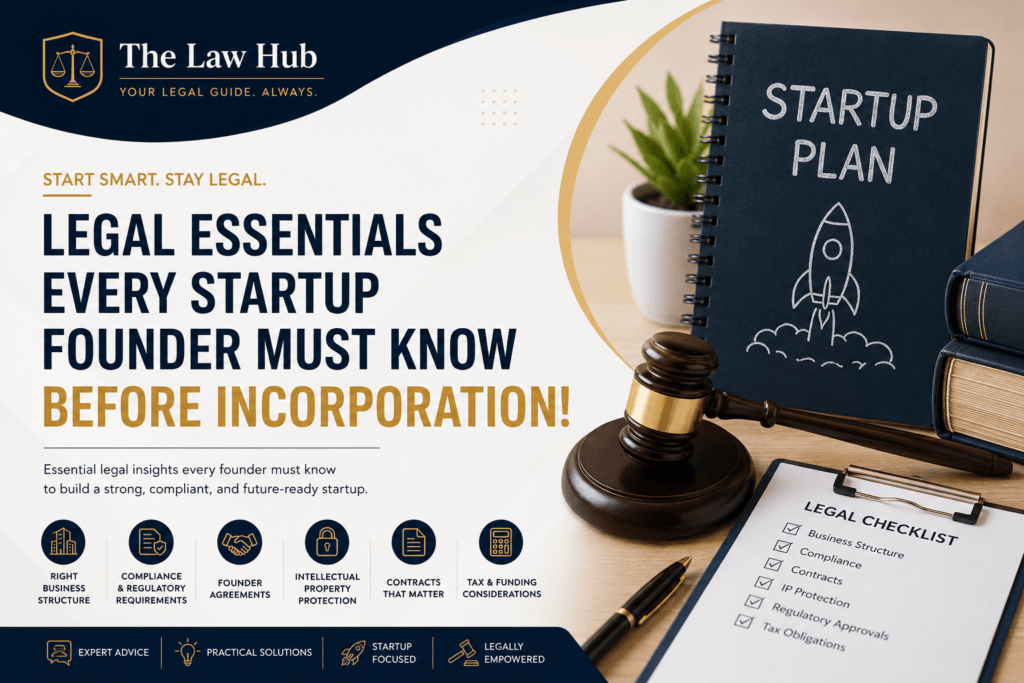

1. Introduction
Starting a company in India? Getting the basics right early keeps things smooth later. Think twice about skipping rules – small errors grow into big problems fast. Startup Founders often chase ideas and money while forgetting what holds their venture together legally. What seems fine now might spark conflict down the road. Survival isn’t just luck – it’s how solid your setup is from day one. Skip nothing. Learn every must-know step before any paper gets signed.
Boom times in India for new businesses. By 2024, more than 117,000 startups had official recognition from DPIIT – that means crowded markets, tight rules. Picking how your company forms matters just as much as guarding your ideas; both shape what comes later. Early choices stick around.
Before putting money in, those who invest or buy will dig deep into the legal background. Having no legal baggage matters way beyond routine checks – it shapes whether deals actually happen.
2. Choosing the Right Startup Business Structure
Starting out, picking a business form matters more than almost anything else legally. Taxes shift depending on what you choose, just like who gets held responsible when things go wrong. Raising money can get easier or harder based on the model picked. Rules to follow change too, not to mention how backers see the venture.
2.1 Private Limited Company
Under India’s 2013 company law, private limited firms top the list for startups chasing funding. Because they shield owners from personal debt risks, these companies attract investors through share ownership. Even when founders step away, the business lives on without interruption.
2.2 Limited Liability Partnership
Starting out as a legal option since 2008, the LLP fits well with consultants and experts offering services. Management stays adaptable here, while rules to follow stay lighter than many business types. Yet when it comes to raising funds through investor shares, this structure tends to fall short compared to others. Though created by law, its use narrows once big financing enters the picture.
2.3 One Person Company
A single person starting out might pick an OPC, created by the Companies Act of 2013, to keep personal assets safe while working alone. Yet, bringing in investors through shares isn’t allowed, also there are limits tied to yearly sales numbers.
2.4 Sole Proprietorship and Partnership
Ownership here means full responsibility if things go wrong. Because of that risk, fast-growing companies usually look elsewhere. Starting small might seem easier, yet consequences can stretch far beyond expectations.
3. Founders’ Agreement: The Unsung Hero
A solid Founders’ Agreement often slips under the radar, even though it matters more than many realize. Before any official paperwork kicks in, this contract lays out how cofounders will work together. What each person brings, who decides what – it’s all spelled out early on.
A Strong Founders Agreement Must Cover Key Terms:
• Equity split and vesting schedule
• Roles and responsibilities of each founder
• Decision-making authority and voting rights
• Exit clauses and buy-sell provisions
• Intellectual property assignment to the company
Secrets stay protected because agreements prevent unfair competition afterward
Most times it takes four years to fully own your shares, with none earned the first year – this setup keeps founders committed. Should someone leave too soon, they get nothing at that point, which protects everyone else down the line. If there were no such rule, an early departure might carry off a big piece of ownership, messing up how stakes are balanced later.
4. Intellectual Property Protection
Hidden value lives in what you can’t touch – like a name, a design, or lines of custom code. From the first moment onward, guarding these things isn’t optional. It just is.
4.1 Trademark Registration
Start by securing your brand identity through registration under the Trade Marks Act, 1999. Ownership of a registered mark means only you can use it, while also opening doors to court remedies when others misuse it.
4.2 Copyright Protection
Software code, content, and creative works are protected automatically under the Copyright Act, 1957, but registration strengthens your legal position in disputes.
4.3 Patent Filing
A fresh tech idea in your new business means it is time to start paperwork through the Patents Act of 1970. Starting here sets an early claim, even when details are still taking shape.
4.4 IP Assignment Agreements
Ownership of creations matters right from the start. When people build things before the company exists, those ideas can still belong to them unless moved properly. Founders, team members, even outside helpers – each must hand over their work through clear paperwork. If not done, what should be the company’s stays scattered. Paperwork turns personal effort into shared assets. Missing steps here risks losing core value down the road.
5. Statutory Compliances Before Launch
Starting a business means more than just signing paperwork. Depending on what you do and how big your operation is, extra steps come into play. Permits might be needed. So could official registrations. Each path brings its own requirements.
• GST Registration: Mandatory if annual turnover exceeds ₹20 lakhs (₹10 lakhs for special category states) under the Goods and Services Tax Act, 2017
• MSME Registration: Register under MSME Act, 2006 (now governed by the MSMED Act) to access government schemes, priority credit, and tax benefits.
• DPIIT Startup Recognition: Register on the Startup India portal to unlock tax exemptions under Section 80-IAC of the Income Tax Act, 1961 and fund-of-fund access.
Stores must register under local laws where they operate. This rule applies to workplaces and business locations alike. Each region sets its own version of the law. Compliance happens through official registration steps. Offices fall into this category across states. Most retail spots need it too. Rules differ slightly depending on location. The requirement covers nearly all service-based sites. Legal operation often begins here. Without it, running a place could break rules.
Paying professional tax? It’s a thing in places like Maharashtra. Karnataka has it too. So does West Bengal – different rules, same idea.
6. Employment and Labour Laws
Hiring your first worker switches on legal duties fast. Skipping these rules might mean heavy fines, plus public trust slipping away.
• Provident Fund (PF): Mandatory once you have 20 or more employees under the Employees’ Provident Funds and Miscellaneous Provisions Act, 1952.
Once there are ten workers or more, coverage kicks in if pay stays under twenty-one thousand rupees monthly. This rule follows the 1948 law on employee state insurance.
Every workplace that has ten workers or more must form an Internal Complaints Committee. This rule comes from the POSH Act of 2013, meant to stop sexual harassment. The committee works inside the company. Its job begins when someone reports misconduct. Without such a group, firms break the law. Handling complaints properly protects everyone involved. Rules apply equally across offices, big or small beyond the employee count.
A fixed-term job needs a written deal showing the role details, pay package, how much warning is needed to leave, who owns created work, rules about poaching staff, plus secrecy duties – spell it out plainly. Each point stands clear when laid early, avoiding later confusion or claims. What belongs to whom gets decided upfront, not after disputes arise. Leaving procedures matter just as much as starting ones, shaping smooth exits. Rules around client contact stay firm even when contracts end. Clarity protects both sides, especially when time-limited roles wrap up.
Startups need to grasp the difference between workers they hire directly and those who operate on their own. Getting this wrong might bring heavy penalties under tax rules, along with issues tied to employment laws. Confusing one for the other opens doors to legal trouble no young company wants.
7. Funding and Investor Agreements
Most funding deals come with piles of paperwork nobody reads closely enough. Jump into outside investment, face contracts that quietly shape your company’s future. Grasping core clauses helps dodge surprises later on. Miss details, lose influence without even noticing.
7.1 Term Sheet
Here’s how it works: a term sheet sets out the main financial and control details of an investment deal without being legally binding. Watch closely when numbers shift – valuation matters, just like how much ownership gets watered down later on. Power shows up at the table too, so notice who takes board positions. When things wind down, some get paid first – that order counts more than most think.
7.2 Shareholders’ Agreement (SHA)
After funding closes, how investors and founders interact is shaped by the SHA. Among the key parts: protection against ownership drops comes through anti-dilution terms. One party forcing a sale happens via drag-along rules. Tag-along provisions let others join an exit deal if one leaves. Access to financial updates falls under information privileges. The ROFR kicks in before shares go elsewhere.
7.3 Convertible Notes and SAFEs
Startups in their first years sometimes get funds using deals that turn into ownership later. Though easier than standard shares, these need clear paperwork so arguments won’t pop up when switching happens.
7.4 RBI Rules on Foreign Investment
Starting with overseas funding means following the rules under FEMA from 1999. Whenever money comes in from abroad, reports must reach the Reserve Bank of India without delay. While FDI guidelines apply, timing matters just as much as the paperwork itself.
8. Data Privacy and Technology Laws
Startups built on tech now face sharper legal demands when handling personal information. Profitability ties closely to how carefully they manage user data.
Starting things off, India’s 2023 law on digital personal data sets clear rules for how information gets handled. Because compliance matters, organizations must follow specific steps when managing someone’s details. Instead of leaving gaps, they need to ensure transparency while collecting data. Where risks exist, firms should appoint individuals responsible for oversight. Since trust plays a role, people have rights to access or correct their own records. If something changes unexpectedly, those affected must be informed promptly. Even small errors matter under this system, so accuracy stays a priority.
What gets gathered sticks to just what’s needed for the job at hand. Nothing extra slips in along the way, Which Includes:
• Obtaining clear and informed consent from data principals
• Implementing reasonable security safeguards
• Report data breaches to the Data Protection Board
• Assigning a Consent Manager or Data Protection Officer when needed
If your startup works across borders, rules like GDPR in Europe or CCPA in California could apply – location of users decides it. Who you serve shapes what laws matter.
9. Comparison Table: Business Structures at a Glance
| Feature | Pvt. Ltd. | LLP | OPC | Partnership |
| Liability | Limited | Limited | Limited | Unlimited |
| VC Fundraising | Yes | Difficult | No | No |
| Min. Directors | 2 | 2 Partners | 1 | 2 Partners |
| Compliance | High | Moderate | Moderate | Low |
| Best For | Funded Startups | Professionals | Solo Founders | Small Businesses |
10. Conclusion
Starting a company means more than filing paperwork – it shapes how well the business lasts. Choosing the correct structure matters, also safeguarding ideas you create. Deals with investors require clear terms, while hiring involves rules that must be followed. Getting these details right begins early, continuing long after official registration.
Here’s the thing – handling this gets easier if done step by step. A startup attorney can guide you through legal details, while clear records of decisions keep things on track. Regulations in India shift often, so staying informed makes all the difference.
Tomorrow’s costly fights often fade when legal steps come early. A smart move now blocks messes later.
11. Frequently Asked Questions
Q1. What is the best legal structure for an Indian startup?
Most startups that raise funds pick a Private Limited setup under India’s 2013 company law. Because it shields owners’ personal assets, while still letting them bring in outside investment. Global backers know this model well – so trust builds faster.
Q2. Is a Founders’ Agreement legally mandatory?
It’s not required by law. Still, going without one? Risky. When ownership splits, job duties, or someone leaves become unclear, things unravel – often quicker than if the business just failed on its own.
Q3. When must a startup register for GST?
Should your total yearly income go above twenty lakh rupees – ten for certain regions – you will need GST registration. Crossing that line isn’t the only trigger. Moving products or services across state borders pulls the requirement too, even with low sales. Location matters less when trade jumps boundaries. The moment interstate activity begins, rules shift.
Q4. Can a startup raise funds from foreign investors freely?
Only partly free. Rules around foreign cash come from FEMA, 1999 along with the FDI guidelines. Some areas need greenlighting by officials, while every overseas fund flow has to reach RBI reports on time.
Q5. What intellectual property protections should a startup secure first?
Starting off, secure trademark rights for your brand name and logo – timing really matters here. When it comes to software and creative material, protection kicks in right away through copyright. In case there’s a new tech-based invention, moving forward with a patent makes sense.
Q6. What is a vesting schedule, and why does it matter?
A slice of ownership earned over time – that’s what a vesting timetable means. It becomes relevant because people stay committed when rewards come slowly. Staying longer often unlocks full benefits. Timing shapes behavior more than promises do. Ownership isn’t handed over all at once, usually. Delayed access keeps teams focused on long-term goals.
Most of the time, it unfolds across four years, starting with a full year before anything is secured. How much someone owns grows gradually instead of all at once. If one founder leaves early, they do not keep an unfair share. That first year acts like a gate – nothing vests until it passes. The rest who stay are shielded from imbalance later on. Investors also gain confidence knowing stakes align with long-term effort.
Q7. Is POSH compliance mandatory for small startups?
True. If a workplace has ten workers or more, setting up an Internal Complaints Committee becomes required by law under the 2013 act meant to handle sexual harassment cases involving women. Though small setups may skip it, larger ones cannot avoid forming such a body when staff numbers cross that mark.
Q8. What is DPIIT startup recognition, and how does it help?
Getting DPIIT approval means the Indian government sees your business as an official startup. Because of this status, you can skip income tax for three years through Section 80-IAC. Rules become easier to follow once recognized. Funding options open up too, especially from government-backed investment pools.
Want to read more expert legal blogs, case laws, and resources?
Visit The Law School Hub — your trusted destination for Indian legal education, case law analysis, and startup legal resources.