






Romalpa Clause Case: Powerful Lessons from Aluminium Industrie Vaassen BV v Romalpa Aluminium Ltd.

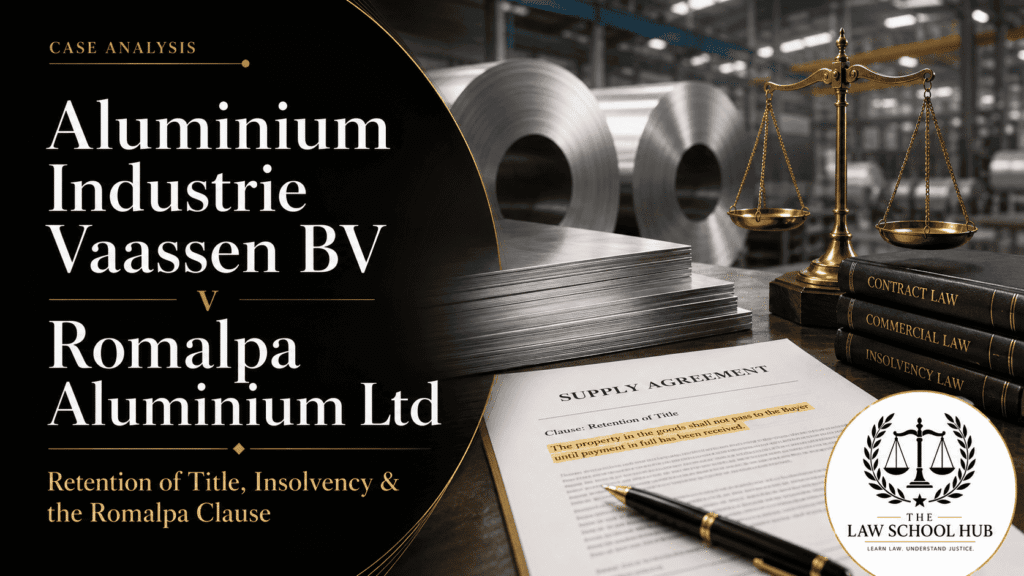
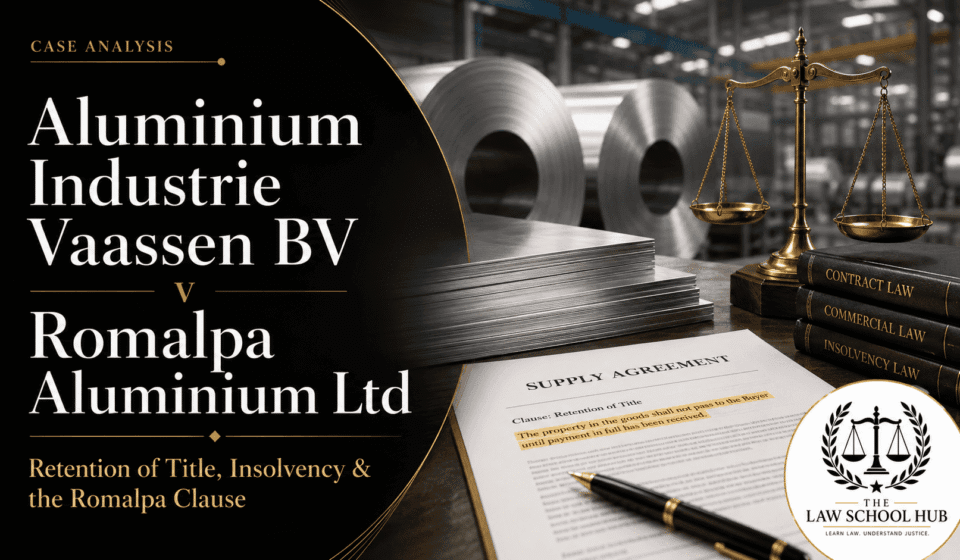
Aluminium Industrie Vaassen BV v Romalpa Aluminium Ltd is the famous Romalpa clause case that explains how a seller can protect goods when a buyer receives them on credit and then becomes insolvent. In simple terms, the Court of Appeal accepted that the supplier could keep ownership of unpaid aluminium foil and, on the facts, also claim proceeds from resale. Therefore, the case matters for every law student, business owner, and contract drafter who wants to understand retention of title in commercial contracts.
Overview
A retention of title clause says that ownership does not pass to the buyer until the seller gets paid. However, the clause must use clear words, fit the commercial relationship, and work in practice. This case became powerful because the seller did more than reserve title. It also created an agency-style arrangement for resale, which helped the seller claim priority when Romalpa entered financial trouble.
Quick Case Overview
| Field | Details |
| Case name | Aluminium Industrie Vaassen BV v Romalpa Aluminium Ltd |
| Citation | [1976] 1 WLR 676; [1976] 2 All ER 552 |
| Court | Court of Appeal, England and Wales |
| Decision date | 16 January 1976 |
| Judges | Roskill LJ, Goff LJ, and Megaw LJ |
| Main doctrine | Retention of title, proprietary claims, and insolvency priority |
| Core takeaway | A seller may retain ownership until payment if the contract clearly says so and the goods or proceeds remain identifiable. |
Facts of the Case
Aluminium Industrie Vaassen BV, a Dutch company, supplied aluminium foil to Romalpa Aluminium Ltd in England. Romalpa processed the foil and sold finished products to customers. However, Romalpa had not paid the supplier when financial difficulty struck. A receiver then stepped in, and a dispute arose over who owned the remaining foil and the money collected from sub-buyers.
The contract said that ownership would transfer only after Romalpa paid the full price. Moreover, it treated Romalpa as a bailee or fiduciary owner until payment. It also allowed Romalpa to resell the goods in the ordinary course of business, but the buyer had to account for the proceeds. Consequently, the supplier argued that the goods and proceeds never became ordinary assets available for creditors.
Legal Issue Before the Court
The central question was clear: could a seller rely on a Romalpa clause to defeat the claims of the buyer’s receiver and other creditors? More precisely, the court had to decide whether the clause merely created a contractual right to payment, or whether it gave the seller a proprietary right in the goods and proceeds.
This distinction matters. A contractual right usually makes the seller an unsecured creditor. By contrast, a proprietary right can let the seller stand outside the pool of general creditors.
Judgment and Reasoning
The Court of Appeal supported the seller. It held that the seller retained title to the unused aluminium foil because the parties had clearly agreed that ownership would not pass until payment. Further, on the special wording and conduct in this case, the court accepted that Romalpa held the resale proceeds for the supplier.
As a result, the supplier did not need to compete like an ordinary unsecured creditor. Instead, it could recover the goods and trace into identifiable proceeds. Therefore, the clause became a landmark tool in commercial and insolvency law.
Why This Case Still Matters
The case gave sellers confidence to use retention of title terms. However, it did not create a magic formula. Courts later looked closely at whether a clause truly retained ownership or tried to create security over the buyer’s assets. If the clause works like a charge, company charge registration rules may become relevant.
Moreover, sellers must keep goods identifiable. If a buyer mixes raw materials into new products, the seller may struggle to claim those products. Therefore, the safer approach includes clear contract wording, separate storage, proper records, and a realistic understanding of how the goods move through the buyer’s business.
Key Legal Points at a Glance
| Point | Simple meaning | Practical impact |
| Retention of title | Seller keeps ownership until payment. | Seller may recover unpaid goods if the buyer fails. |
| Proceeds clause | Seller claims money received from resale. | It works only when the wording and relationship support it. |
| Identifiability | Goods must remain traceable. | Mixed or transformed goods weaken the claim. |
| Charge risk | A broad clause may look like security. | Registration rules can affect enforceability. |
Simple Illustration
Imagine a supplier sells steel sheets to a manufacturer on 60 days’ credit. The contract says title remains with the supplier until full payment. Meanwhile, the manufacturer becomes insolvent before paying. If the steel sheets still sit separately in the warehouse, the supplier has a strong claim to take them back. However, if the manufacturer has melted them into a new machine, the supplier faces a harder fight. This practical problem shows why the clause must match the goods and the business process.
5 Practical Lessons from the Decision
- Draft the clause before delivery, not after a dispute starts.
- Make the buyer accept the terms as part of the contract.
- Require the buyer to store unpaid goods separately and mark them as the seller’s property.
- Deal carefully with resale because a proceeds claim often needs a true fiduciary or agency relationship.
- Review the clause whenever the business changes, because one template cannot protect every supply chain.
Legal References and Reliable Backlinks
The legal background sits mainly in sale of goods and insolvency principles. Section 17 of the Sale of Goods Act 1979 focuses on the parties’ intention about when property passes. Section 19 of the same Act allows a seller to reserve the right of disposal until conditions are met. In addition, Section 25 deals with a buyer in possession and the protection of good-faith sub-buyers. Modern charge registration issues may also arise under Part 25 of the Companies Act 2006, especially if a clause operates more like security than simple ownership retention.
| Legal Reference | Why It Matters | Backlink |
| Aluminium Industrie Vaassen BV v Romalpa Aluminium Ltd | Case report and judgment details | Open source |
| GOV.UK Official Receiver guidance on retention of title | Insolvency guidance on ROT claims | Open source |
| Sale of Goods Act 1979, Section 17 | Property passes when parties intend it to pass | Open source |
| Sale of Goods Act 1979, Section 19 | Seller may reserve right of disposal | Open source |
| Sale of Goods Act 1979, Section 25 | Buyer in possession and sub-buyer issues | Open source |
| Companies Act 2006, Section 859A | Registration of company charges | Open source |
| The Law School Hub | Legal blogs, acts, and case-law resources | Open source |
Conclusion
Aluminium Industrie Vaassen BV v Romalpa Aluminium Ltd remains a must-read case because it turns a simple unpaid invoice into a deep lesson on ownership, credit risk, and insolvency priority. The Romalpa clause protects sellers, but only when the wording, records, and commercial practice support it. Therefore, students should remember the case for its principle, and businesses should treat it as a drafting warning: retain title clearly, trace proceeds carefully, and never assume one clause solves every insolvency risk.
FAQs on Aluminium Industrie Vaassen BV v Romalpa Aluminium Ltd
What is the Romalpa clause case about?
The Romalpa clause case is about a seller who supplied goods on credit and used a retention of title clause to keep ownership until payment. When the buyer became insolvent, the seller claimed the goods and certain proceeds.
Why is Aluminium Industrie Vaassen BV v Romalpa Aluminium Ltd important?
It is important because it confirmed that a properly drafted retention of title clause can give a seller a proprietary claim, rather than only a debt claim.
What is a retention of title clause?
A retention of title clause says the seller keeps ownership of goods until the buyer pays the price or satisfies agreed conditions.
Can a seller always claim resale proceeds?
No. A seller needs strong wording, identifiable proceeds, and often a genuine agency or fiduciary arrangement. Otherwise, the court may treat the claim as a charge.
Does a Romalpa clause protect against insolvency?
It can protect a seller if the clause forms part of the contract and the goods or proceeds remain identifiable. However, it cannot fix weak records or unclear drafting.
What happens when goods are mixed or manufactured?
The seller may lose a simple ownership claim if the original goods no longer exist as separate items. Therefore, mixed goods clauses need careful drafting.
Is a Romalpa clause the same as a charge?
Not always. A basic clause that keeps ownership until payment usually differs from a charge. However, wider clauses over proceeds or new products may look like security.
What should businesses learn from the case?
Businesses should use clear written terms, keep unpaid goods identifiable, record stock carefully, and seek legal review for proceeds or all-monies clauses.
We provide case laws, legal acts, and student-friendly legal resources. Want to read more blogs? Visit The Law School Hub for more practical law guides.