
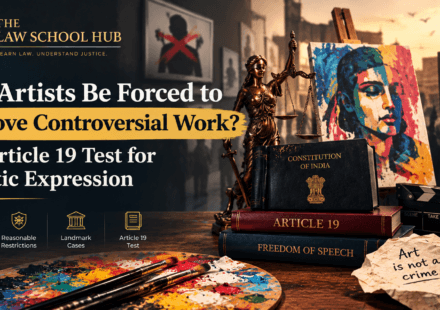
Can Artists Be Forced to Remove Controversial Work? The Article 19 Test for Artistic Expression.

Can a painter be forced to take down a controversial painting? Can the government ban a movie just because a specific community finds it offensive? If you are a law student, a young lawyer, or simply…
Know More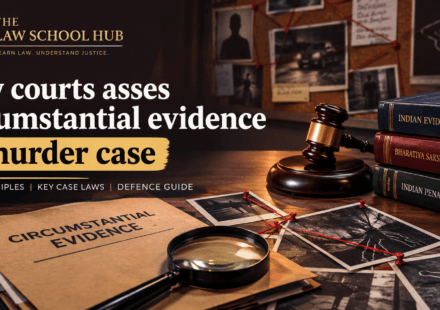
How Do Courts Assess Circumstantial Evidence in Murder Cases?
Can a court convict a person of murder if nobody actually saw them commit the crime? The short answer is yes. However, securing a conviction using only circumstantial evidence in murder cases is one…
Know More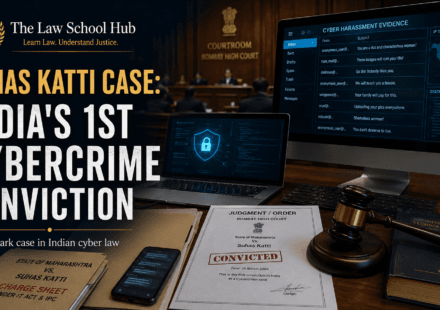
State of Tamil Nadu v. Suhas Katti (2004): India’s First Cybercrime Conviction
Introduction In the early 2000s, the internet was a relatively new frontier in India. While the government had passed laws to regulate online activities, there was a widespread public myth that…
Know More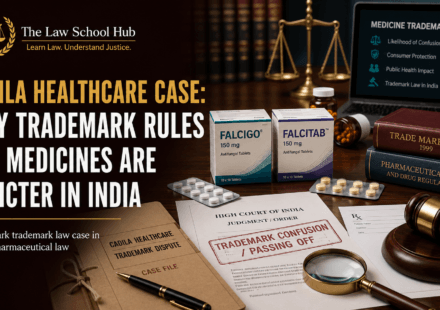
Cadila Healthcare Case: Why Trademark Rules for Medicines Are Stricter in India
Introduction In the world of business, when two competing companies sell completely different products with similar names, the result is usually mild consumer confusion. If a shopper accidentally…
Know More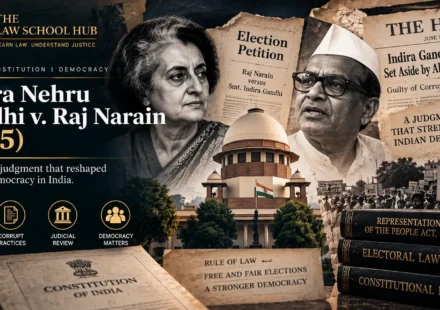
Indira Nehru Gandhi v. Raj Narain (1975): Free Elections, the Emergency, and How the Basic Structure Doctrine Saved Indian Democracy
Introduction In the history of any democracy, there are rare moments when a single court case decides the fate of the entire nation. The case of Indira Nehru Gandhi v. Raj Narain is perhaps the most…
Know More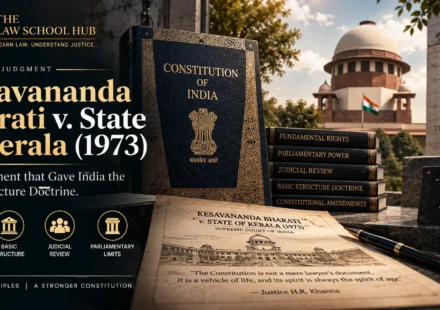
Kesavananda Bharati v. State of Kerala (1973): The Most Important Constitutional Case India Has Ever Seen
Introduction In the history of global constitutional law, very few judicial decisions have actually saved a democracy. The case of His Holiness Kesavananda Bharati Sripadagalvaru v. State of Kerala…
Know More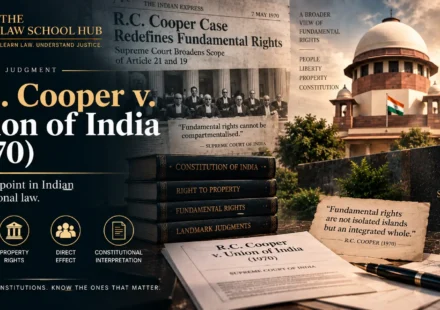
R.C. Cooper v. Union of India (1970): The Bank Nationalisation Case That Shook India’s Economic Constitution
Introduction In the history of Indian constitutional law, few judgments have shaped the relationship between state economic power and individual fundamental rights quite as dramatically as R.C.…
Know More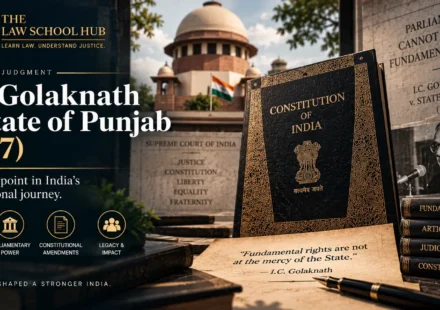
I.C. Golaknath v. State of Punjab (1967): The Historic Ruling That Said Parliament Cannot Touch Your Fundamental Rights
Introduction In the constitutional history of India, few legal battles have been as fierce as the fight between the Indian Parliament and the Supreme Court over the power to change the Constitution.…
Know More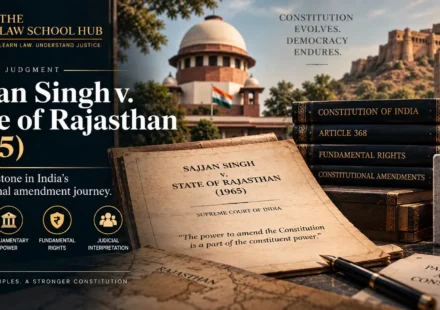
Sajjan Singh v. State of Rajasthan (1965): Parliament’s Power to Amend the Constitution — What the Supreme Court Ruled
Introduction The history of the Indian Constitution is essentially a story of a long power struggle between two great institutions: the Indian Parliament and the Supreme Court of India. The case of…
Know More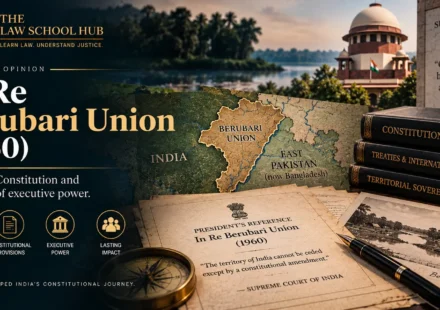
In Re Berubari Union (1960): Can India Give Away Its Territory? The Supreme Court’s Historic Answer
Introduction The territory of a country is its most physical and sacred asset. But what happens if the government of India wants to give a piece of Indian land to a foreign country to settle a border…
Know More